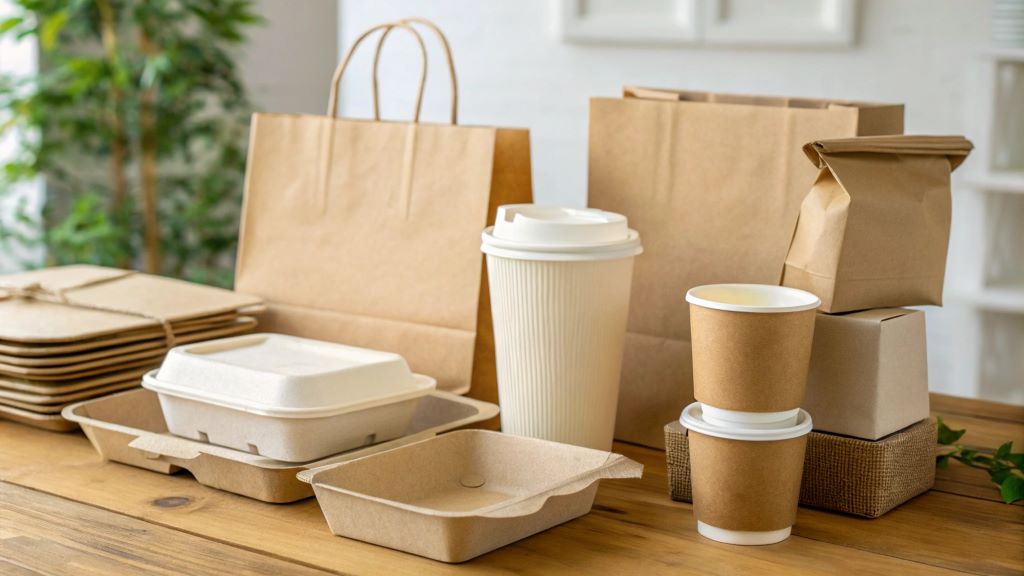
In today’s eco-conscious world, small businesses face a unique challenge: delivering exceptional products while minimizing environmental impact. Sustainable Packaging Alternatives for Small Businesses are no longer a niche trend but a critical strategy for staying competitive, building brand loyalty, and aligning with consumer values. With 60-70% of consumers willing to pay more for eco-friendly packaging, the demand for green solutions is undeniable. Yet, for small businesses, the transition can feel daunting—balancing cost, functionality, and sustainability is no small feat. This article dives deep into the latest sustainable packaging trends, offering actionable solutions, expert insights, and real-world examples to help your business thrive in a greener future.
As a small business owner, I’ve seen firsthand how packaging choices impact customer perception and operational costs. The shift to sustainable alternatives isn’t just about saving the planet—it’s about smart business. From biodegradable materials to minimalist designs, the options are vast, but choosing the right one requires understanding the landscape. Let’s explore the why, what, and how of sustainable packaging, backed by data, expert opinions, and practical steps to make your business stand out.
Why Sustainable Packaging Matters for Small Businesses
The Consumer Demand Driving Change
Consumers are voting with their wallets. A 2023 McKinsey survey found that 60-70% of global consumers are willing to pay a premium for sustainable packaging, with 50% prioritizing eco-friendly options even if costs remain the same. This shift is particularly pronounced among Millennials and Gen Z, who value brands that reflect their environmental concerns. For small businesses, ignoring this trend risks alienating a growing segment of the market.
From a logical standpoint, aligning with consumer values builds trust and loyalty. A small business that adopts sustainable packaging signals responsibility, differentiating itself from competitors stuck in the single-use plastic era. However, critics argue that consumer willingness to pay more is inconsistent—price and convenience often trump eco-credentials. While this is true for some, the data shows a clear trend: sustainability is a growing priority, and businesses that act early can capture market share.
Environmental Impact and Regulatory Pressure
Packaging accounts for 40% of global plastic waste, with single-use plastics being a major culprit. Small businesses, often reliant on cost-effective plastic solutions, contribute to this problem. Switching to sustainable alternatives reduces waste and aligns with tightening regulations. For example, the EU’s Green Deal and the USA’s Plastic Waste Reduction Act push for biodegradable and recyclable materials, with non-compliance leading to fines or reputational damage.
Skeptics might argue that regulatory changes disproportionately burden small businesses with higher costs. While initial investments can be steep, sustainable packaging often leads to long-term savings through tax incentives and reduced material use. Logically, proactive adoption positions businesses ahead of the curve, avoiding last-minute scrambles when laws tighten.
Brand Reputation and Market Edge
Sustainable packaging enhances brand image. A 2021 Think With Google report revealed that 82% of consumers prioritize sustainability, with 43% viewing packaging’s environmental impact as “extremely important.” For small businesses, eco-friendly packaging can be a differentiator in crowded markets. Take Vegan Bunny, a candle company that uses soy-based inks and rubber-derived glues in its kraft mailer boxes, reinforcing its ethical stance and attracting eco-conscious customers.
On the flip side, some argue that sustainability claims can backfire if perceived as greenwashing. Transparency is key—businesses must back claims with certifications like FSC (Forest Stewardship Council) or compostability standards. Logically, authentic sustainability efforts build stronger customer relationships than superficial marketing ploys.
Reference: McKinsey & Company, “Sustainability in packaging: Inside the minds of global consumers,” 2023. Reference: Think With Google, “Sustainability a high priority for 82% of consumers,” 2021.
Top Sustainable Packaging Alternatives for Small Businesses
Biodegradable and Compostable Materials
Biodegradable materials, like cornstarch-based bioplastics and bamboo, break down naturally, reducing landfill waste. Compostable packaging, such as bagasse (sugarcane fiber) or PLA (polylactic acid), goes further by turning into nutrient-rich compost under specific conditions. Companies like Notpla use seaweed-based packaging that dissolves in water, offering a zero-waste solution for food products.
Pros: These materials significantly cut environmental impact. For instance, PLA reduces carbon emissions by up to 60% compared to traditional plastics. They’re ideal for food and beverage businesses, where safety and biodegradability are paramount.
Cons: Higher costs can deter small businesses. Biodegradable materials are often 20-30% more expensive than conventional options due to limited economies of scale. Additionally, composting requires industrial facilities, which aren’t universally accessible.
Solution: Start with small batches of compostable packaging for high-margin products. Partner with suppliers like EcoEnclose, which offers customizable biodegradable mailers. Communicate the eco-benefits to customers to justify slight price increases.
Case Study: Monday’s Child, a UK clothing brand, uses biodegradable boxes that double as dollhouses, adding value while reducing waste.
Recycled and Recyclable Materials
Recycled paper and cardboard dominate the sustainable packaging market, with a 42% share projected by 2025. These materials are cost-effective, widely recyclable, and supported by robust infrastructure. Pratt’s 100% recycled corrugated boxes, available on Amazon, are a popular choice for small businesses due to their affordability (around $0.64 per box in bulk).
Pros: Recycled materials reduce resource consumption. For example, producing recycled paper uses 70% less energy than virgin paper. They’re also versatile, suitable for boxes, mailers, and void fill.
Cons: Quality can vary, and some recycled materials lack the durability of virgin alternatives. Critics note that recycling rates remain low (only 66% of paper is recycled globally), limiting impact.
Solution: Opt for FSC-certified recycled materials to ensure quality. Use minimalist designs to reduce material needs. Partner with Green Packaging Group for bulk orders of recycled mailers and boxes.
Reference: Future Market Insights, “Sustainable Packaging Market Insights & Future Demand 2025 to 2035,” 2023.
Reusable and Refillable Packaging
Reusable packaging, like Furoshiki cloth wraps or durable containers, encourages customers to reduce waste. Refillable systems, where customers return containers for refills, are gaining traction in cosmetics and personal care. Unilever’s 2025 pledge for 100% reusable, recyclable, or compostable packaging highlights this trend.
Pros: Reusable packaging fosters customer engagement and loyalty. A 2023 Jabil survey found that 49% of packaging decision-makers see reusable systems as a key innovation. They also reduce long-term material costs.
Cons: High upfront costs for durable materials and logistics (e.g., reverse supply chains) can be prohibitive. Consumer participation varies, with some unwilling to return containers.
Solution: Start with reusable packaging for local markets to simplify logistics. Offer incentives, like discounts for returning containers. For Furoshiki, repurpose excess fabric from production to keep costs low.
Reference: Jabil, “Five Sustainable Packaging Trends Shaping the Future,” 2023.
Minimalist Packaging Designs
Minimalist packaging focuses on reducing material use while maintaining functionality. Think slimmed-down boxes or paper wraps instead of bulky plastic clamshells. The electronics industry, for instance, has embraced smaller, material-efficient boxes to cut waste and shipping costs.
Pros: Minimalist designs lower production and shipping costs. A 2022 McKinsey report noted that optimizing packaging can reduce transport emissions by 10-15%. They also appeal to consumers who value simplicity.
Cons: Over-minimization risks product damage, leading to returns and reputational harm. Some products require protective layers that minimalism can’t provide.
Solution: Conduct product testing to ensure minimalist packaging maintains safety. Use corrugated cardboard inserts for fragile items. Collaborate with Packlane for custom, minimalist boxes with sustainable dividers.
Reference: McKinsey & Company, “Sustainability in packaging: Five key levers for significant impact,” 2022.
Innovative Materials: Mushroom, Seaweed, and Beyond
Emerging materials like mushroom packaging (mycelium) and seaweed-based films are revolutionizing the industry. Dell’s mushroom-based polystyrene substitute, for example, is 100% biodegradable and as protective as traditional foam. Seaweed packaging, pioneered by Notpla, is edible and dissolves naturally, ideal for food applications.
Pros: These materials have near-zero environmental impact. Seaweed cultivation absorbs CO2, contributing to climate change mitigation. They also create a “wow” factor, enhancing brand appeal.
Cons: Scalability is a challenge. Mushroom packaging requires controlled growing conditions, and seaweed solutions are still niche, with costs 50-100% higher than plastics.
Solution: Use innovative materials for premium products to offset costs. Partner with suppliers like Storopack for mycelium-based solutions. Highlight the unique story of these materials in marketing to boost perceived value.
Reference: Environment+Energy Leader, “Top 10 Sustainable Packaging Trends Reshaping the Industry,” 2024.
Overcoming Challenges in Adopting Sustainable Packaging
Cost Barriers and Financial Strategies
The biggest hurdle for small businesses is cost. Sustainable materials like bioplastics or mycelium can be 20-50% more expensive than conventional options due to production complexities and lower economies of scale. A 2023 Future Market Insights report noted that this cost barrier disproportionately affects small businesses, with large corporations better equipped to absorb expenses.
Counterpoint: While upfront costs are higher, long-term savings are possible. Tax incentives, like those in the U.S. for green practices, can offset initial investments. Additionally, minimalist designs and reusable systems reduce material use over time.
Solution: Start small by integrating sustainable packaging for select products. Apply for government grants or sustainability-focused loans. Use platforms like Warespace to access affordable, eco-friendly supplies in small quantities.
Reference: Future Market Insights, “Sustainable Packaging Market Insights & Future Demand 2025 to 2035,” 2023.
Supply Chain and Infrastructure Limitations
Sustainable packaging often requires specialized suppliers and recycling/composting infrastructure, which may not be available locally. For example, only 20% of U.S. municipalities have access to industrial composting facilities, limiting the effectiveness of compostable materials.
Counterpoint: Growing demand is driving infrastructure improvements. The global sustainable packaging market is projected to reach $557.65 billion by 2034, incentivizing suppliers to expand offerings.
Solution: Partner with regional suppliers like Paper Mart for recyclable materials with established infrastructure. For compostable options, verify local disposal options before investing. Use online directories like Green Packaging Group to find vetted suppliers.
Reference: Towards Packaging, “Sustainable Packaging Market Size 6.6% CAGR & USD 557.65 Bn by 2034,” 2025.
Consumer Education and Engagement
Even with sustainable packaging, consumer behavior can undermine efforts. Only 48% of consumers are willing to change habits to reduce environmental impact, per a Nielsen study. Misunderstandings about recycling or composting can lead to improper disposal.
Counterpoint: Education can bridge this gap. Clear labeling and marketing campaigns increase compliance. Brands like Method, which uses ocean plastic bottles, successfully educate consumers through storytelling.
Solution: Include disposal instructions on packaging (e.g., “Compost in industrial facilities”). Use social media to share your sustainability journey, as Vegan Bunny does with its kraft boxes. Offer rewards for eco-friendly actions, like returning reusable containers.
Reference: Nielsen, “48% of consumers willing to change habits for sustainability,” cited in BigCommerce, 2020.
Future Trends in Sustainable Packaging
On-Demand Packaging Technology
On-demand packaging systems, using digital printing and automated machinery, create custom-fit solutions that minimize material waste. This is especially valuable for e-commerce, where varied product sizes lead to excess packaging. A 2024 Environment+Energy Leader article predicts on-demand systems will become standard in industries prioritizing customization.
Impact for Small Businesses: These systems reduce shipping costs and waste, but high setup costs (often $50,000+) are a barrier. Leasing equipment or partnering with third-party providers like Packlane can make this accessible.
Mono-Material Packaging
Mono-material packaging, made from a single recyclable material, simplifies recycling by eliminating the need for separation. It’s gaining traction, with 42% of packaging decision-makers prioritizing it, per a 2023 Jabil survey. For example, paper-based mono-materials are fully recyclable in standard facilities.
Impact for Small Businesses: Mono-materials are cost-competitive and align with consumer preference for recyclable options. However, they may require thicker layers, increasing weight and shipping costs. Testing durability is crucial.
Smart Packaging and Traceability
Smart packaging, like QR codes or NFC tags, provides transparency about a product’s sustainability journey. Consumers can scan to learn about materials, disposal methods, or carbon footprint. A 2024 Mintel report notes that 29-42% of U.S. consumers associate transparency with trust, making smart packaging a loyalty driver.
Impact for Small Businesses: Implementing smart packaging is affordable via printed QR codes. It enhances customer engagement but requires digital infrastructure for data management. Start with simple QR codes linking to a sustainability page on your website.
Reference: Mintel, “Unwrapped: Eco-Friendly Innovation in Food and Drink Packaging,” 2024.
Practical Steps to Implement Sustainable Packaging
- Assess Current Packaging: Audit your materials to identify waste and non-sustainable components. Use tools like EcoEnclose’s sustainability calculator to estimate environmental impact.
- Research Suppliers: Source eco-friendly materials from vetted suppliers like Paper Mart, Packlane, or Storopack. Prioritize local vendors to reduce shipping emissions.
- Start Small: Test sustainable options on one product line. For example, switch to recycled cardboard boxes for your top-selling item and gather customer feedback.
- Educate Customers: Use packaging inserts or social media to explain your sustainability efforts. Highlight certifications like FSC or BPI (Biodegradable Products Institute).
- Monitor and Scale: Track costs, customer response, and environmental impact. Gradually expand sustainable packaging across your product range as savings and demand grow.
The Ultimate Guide to Starting a Successful Midwifery Business
FAQs About Sustainable Packaging for Small Businesses
Q: Is sustainable packaging more expensive than traditional options?
A: Initially, yes—sustainable materials can cost 20-50% more. However, tax incentives, reduced material use, and consumer willingness to pay a premium can offset costs. Start with affordable options like recycled cardboard.
Q: How can I ensure my packaging is truly sustainable?
A: Look for certifications like FSC, BPI, or Cradle to Cradle. Partner with reputable suppliers and verify claims about recyclability or compostability. Transparency with customers builds trust.
Q: What’s the easiest sustainable packaging option to adopt?
A: Recycled paper and cardboard are the most accessible due to lower costs and widespread recycling infrastructure. They’re versatile for boxes, mailers, and fillers.
Q: How do I convince customers to pay for sustainable packaging?
A: Highlight the environmental and ethical benefits through storytelling. Use social media to share your journey, as Vegan Bunny does. Offer loyalty discounts for eco-friendly purchases.
Conclusion
Sustainable Packaging Alternatives for Small Businesses are a game-changer, blending environmental responsibility with business savvy. By adopting biodegradable, recyclable, or innovative materials, small businesses can reduce their ecological footprint, meet consumer demand, and gain a competitive edge. The journey isn’t without challenges—costs, supply chain gaps, and consumer education require strategic planning—but the rewards are worth it. With the global sustainable packaging market projected to hit $557.65 billion by 2034, now is the time to act. Start small, choose reputable suppliers, and tell your sustainability story to build a loyal customer base. Your business can thrive while making the planet a better place—one package at a time.
Read More: