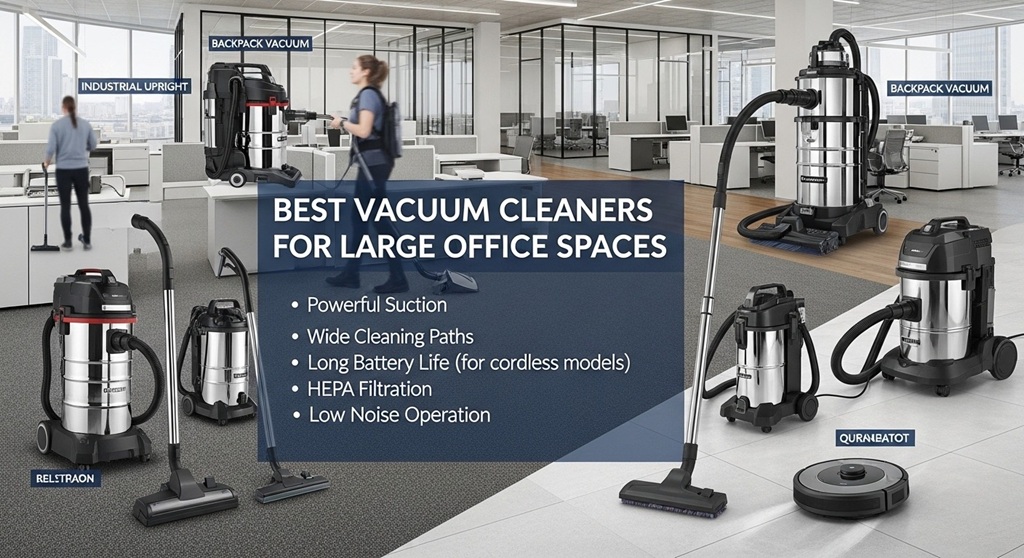
Maintaining cleanliness in a large office space is not just about appearance—it directly affects employee health, productivity, and workplace safety. According to research by the International Facility Management Association (IFMA), workplace cleanliness can improve employee productivity by up to 5% and reduce sick days caused by dust and allergens.
However, cleaning large offices with standard household equipment often leads to slow cleaning times, poor suction power, and higher maintenance costs. That’s why many facilities managers rely on industrial vacuum cleaners and high capacity vacuum machines designed for commercial environments.
The challenge is choosing the right equipment. Large office environments contain different floor types, heavy foot traffic areas, and tight cleaning schedules. Selecting the wrong machine can increase downtime and cleaning expenses.
This guide explains how to choose the best large office cleaning tools, what features to prioritize, and how commercial-grade vacuums improve efficiency. By the end, you’ll know exactly what to look for when selecting a vacuum cleaner for large office environments.
Why Do Large Office Spaces Require Industrial Vacuum Cleaners?
Short answer: Large office spaces require industrial vacuum cleaners because they deliver stronger suction, larger dust capacity, and longer operating times compared to standard household models.
Typical offices include hundreds of square meters of floor area, carpets, tile surfaces, and furniture zones. Standard vacuums struggle to handle this workload.
Industrial-grade equipment is designed specifically for heavy-duty cleaning tasks.
Key Differences Between Household and Industrial Vacuums
| Feature | Household Vacuum | Industrial Vacuum Cleaner |
|---|---|---|
| Suction Power | Low to Medium | High Power Motor |
| Dust Capacity | 1–2 Liters | 10–70 Liters |
| Operating Time | Short Cleaning Cycles | Continuous Use |
| Durability | Light Duty | Heavy Duty Construction |
| Coverage Area | Small Homes | Large Offices and Facilities |
For example, a facility management case study conducted by a commercial cleaning company found that switching to high capacity vacuum systems reduced cleaning time in a 40,000 sq ft office building by 32%.
This efficiency is why commercial buildings prefer industrial vacuum cleaners for large-scale operations.
What Features Should You Look for in a High Capacity Vacuum?
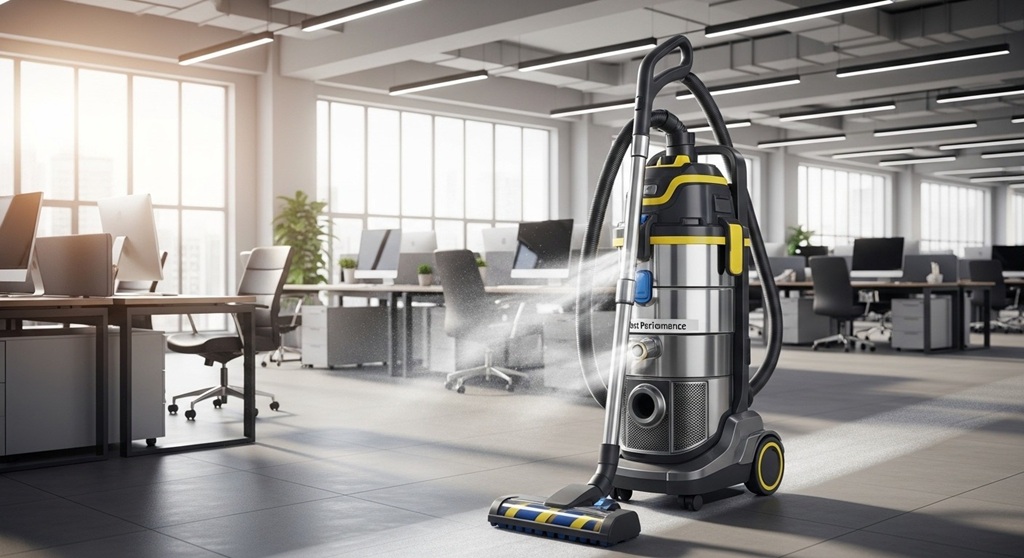
Short answer: When selecting a vacuum cleaner for large offices, prioritize suction power, tank capacity, filtration system, durability, and noise level.
These features determine how effectively the machine will perform in commercial environments.
1. Strong Motor Power
High suction power is essential for deep cleaning carpets and removing fine dust particles.
- Commercial vacuums typically range from 1000W to 3000W
- Stronger motors handle heavy debris
- Improves cleaning efficiency
Offices with thick carpets or large open areas benefit most from powerful motors.
2. Large Dust Tank Capacity
A high capacity vacuum allows cleaning staff to work longer without frequent emptying.
- Typical industrial capacity: 20L – 70L
- Reduces interruptions during cleaning
- Improves productivity
This feature is essential for large office cleaning tools used across multiple floors.
3. HEPA Filtration Systems
Air quality is a major concern in offices. HEPA filtration captures extremely small particles.
- Captures 99.97% of particles as small as 0.3 microns
- Removes allergens and dust mites
- Improves indoor air quality
HEPA filters are especially valuable in offices with employees who suffer from allergies.
4. Low Noise Operation
Cleaning often happens during office hours. Excessive noise can disrupt employees.
Many modern industrial vacuum cleaners operate between 60–70 dB, making them suitable for daytime cleaning.
5. Durable Construction
Commercial cleaning equipment must handle constant use.
- Stainless steel tanks
- Heavy-duty wheels
- Industrial hoses
Durability reduces long-term maintenance costs.
What Types of Vacuum Cleaners Work Best for Large Offices?
Short answer: The best vacuum types for large offices include upright vacuums, backpack vacuums, wet/dry vacuums, and robotic cleaning systems.
Each type serves different cleaning needs.
1. Upright Commercial Vacuums
These machines are commonly used in carpeted office environments.
- Wide cleaning path
- Strong suction
- Efficient for large floor areas
They are often considered essential large office cleaning tools.
2. Backpack Vacuum Cleaners
Backpack vacuums are designed for mobility.
- Allows cleaners to move quickly
- Perfect for stairs and tight spaces
- Reduces cleaning time
Studies in facility management show backpack vacuums can increase cleaning productivity by up to 50%.
3. Wet/Dry Industrial Vacuum Cleaners
These machines can handle both liquid spills and dry debris.
- Ideal for office kitchens and cafeterias
- Useful during maintenance cleaning
- High capacity tanks
They are versatile options for multi-purpose cleaning.
4. Robotic Vacuum Systems
Automation is becoming popular in commercial cleaning.
Robotic cleaners operate independently and handle routine floor cleaning tasks.
- Reduces labor costs
- Maintains daily cleanliness
- Works during off-hours
How Do Industrial Vacuum Cleaners Improve Cleaning Efficiency?
Short answer: Industrial vacuum cleaners improve efficiency by increasing cleaning speed, reducing downtime, and improving dust removal performance.
Cleaning efficiency matters in large office facilities where time and labor costs are significant.
Case Study: Commercial Office Cleaning Efficiency
A facility services company in Singapore evaluated two cleaning approaches in a corporate office building.
| Cleaning Method | Time Required | Cleaning Staff |
|---|---|---|
| Standard Vacuum | 5 hours | 4 workers |
| Industrial Vacuum Cleaner | 3.4 hours | 3 workers |
The results showed:
- 32% reduction in cleaning time
- 25% lower labor costs
- Improved dust removal
These improvements highlight why commercial facilities rely on high capacity vacuum equipment.
How Often Should Large Offices Be Vacuumed?
Short answer: High-traffic areas should be vacuumed daily, while low-traffic zones may require cleaning two to three times per week.
Cleaning frequency depends on office layout and employee density.
Recommended Office Vacuuming Schedule
- Reception Areas: Daily
- Open Workspaces: 3–5 times per week
- Meeting Rooms: 2–3 times per week
- Carpeted Corridors: Daily
- Storage Areas: Weekly
Using efficient industrial vacuum cleaners makes it easier to maintain this schedule without increasing cleaning staff workload.
How Can Businesses Reduce Cleaning Costs in Large Offices?
Short answer: Businesses can reduce cleaning costs by using high capacity vacuum cleaners, improving cleaning schedules, and investing in durable equipment.
Cleaning budgets are a major operational expense for large offices.
Here are strategies used by facility managers:
1. Invest in Commercial-Grade Equipment
Industrial vacuum cleaners last longer and require fewer repairs.
2. Train Cleaning Staff
Proper equipment use increases efficiency.
3. Use Multi-Purpose Cleaning Tools
Wet/dry vacuums reduce the need for multiple machines.
4. Schedule Cleaning During Low Traffic Hours
This allows faster cleaning with fewer interruptions.
Conclusion: How Can You Choose the Right Vacuum Cleaner for Your Office?
Selecting the right vacuum cleaner for large office spaces requires careful consideration of performance, durability, and efficiency. Standard household equipment often fails to meet the demands of commercial environments.
Industrial-grade machines provide stronger suction, larger capacity, and longer operating times. These features allow cleaning teams to work faster and maintain consistent cleanliness across large facilities.
By prioritizing features such as powerful motors, HEPA filtration, large tanks, and durable construction, businesses can significantly improve cleaning efficiency while reducing operational costs.
If you manage an office facility or cleaning team, now is the time to evaluate your cleaning equipment. Investing in the right industrial vacuum cleaners and high capacity vacuum systems will help maintain a cleaner workplace, protect employee health, and streamline your maintenance workflow.
Take action today: Assess your office cleaning requirements and upgrade to professional large office cleaning tools that deliver long-term performance.
Frequently Asked Questions (FAQs)
What size vacuum cleaner is best for large offices?
The best vacuum for large offices typically has a tank capacity between 20 and 70 liters and a motor power above 1200W. High capacity vacuum cleaners reduce downtime and improve cleaning efficiency.
Are industrial vacuum cleaners worth the investment?
Yes. Industrial vacuum cleaners last longer, clean faster, and reduce labor costs. Many commercial facilities report up to 30% faster cleaning times after upgrading to commercial-grade equipment.
What is the difference between commercial and industrial vacuum cleaners?
Commercial vacuum cleaners are designed for regular office cleaning, while industrial vacuums handle heavy debris, construction dust, and liquid waste. Industrial models usually offer stronger motors and larger tanks.
Can robotic vacuum cleaners clean large offices effectively?
Robotic vacuums are useful for routine maintenance cleaning but usually cannot replace high-power industrial vacuum cleaners for deep cleaning tasks.
How long do industrial vacuum cleaners typically last?
With proper maintenance, commercial vacuum cleaners can last between 5 and 10 years. Durable construction and replaceable parts contribute to their longevity.
Do vacuum cleaners improve office air quality?
Yes. Vacuum cleaners with HEPA filtration remove fine dust particles, allergens, and airborne contaminants, helping improve indoor air quality in office environments.
What maintenance do commercial vacuum cleaners require?
Routine maintenance includes cleaning filters, emptying dust tanks, inspecting hoses, and replacing worn parts. Regular maintenance ensures optimal performance and longer equipment lifespan.
Read More Also: How Adjustable Armrests Improve Comfort in Office Chairs
Find out: How to Select the Best Label Maker for Small Business Use